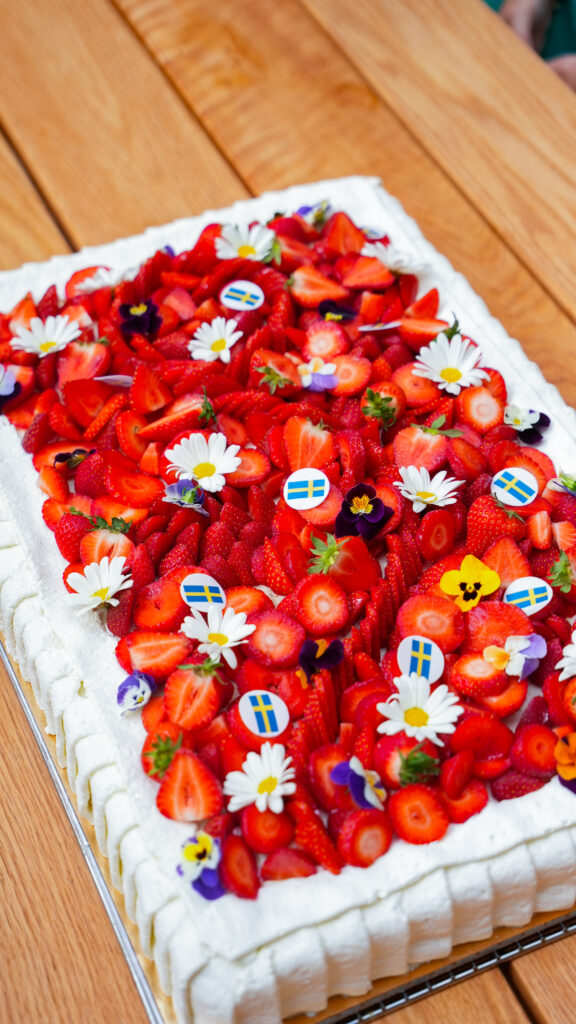
Midsummer is one of Sweden’s most beloved celebrations, a time to celebrate the summer solstice, the power of nature, and the blossoming of life. It is celebrated on a Friday between June 19 and 25, usually the one closest to the summer solstice. It’s a time when Swedes gather with family and friends to dance, sing, and enjoy good food, often outdoors, surrounded by flowery meadows, lush greenery, and the bright summer sun that barely sets in the northern parts of the country.
Since Nordic times, the longest day of the year was celebrated with festivities and rituals for fertility, a good harvest, and a prosperous life. When Christianity spread throughout the Nordic countries, the celebration became associated with St. John’s Day, June 24, but pagan traditions persisted. Today, these ancient roots are reflected in the flower wreaths worn on the head, the traditional Swedish Midsummer pole decorated with birch leaves and flowers, as well as in symbols that celebrate the vitality of nature and the abundance of summer.
In the 19th century, the traditional Swedish Midsummer pole became the central element of the festivities, especially in rural areas, and the tradition continues to this day. Almost every Swedish village erects its pole, around which children and adults dance and sing traditional songs during games like “Små grodorna”. Midsummer lunch often consists of new potatoes, herring, sour cream, fresh herbs, and strawberries, flavors inseparable from the Swedish summer. It’s a day of joy and togetherness, to fully enjoy the beauty of nature.